
Understanding API Gateways, API Composition, and Load Balancing
Modern applications are often built using many small services instead of one large program. Each service handles a specific task.
For example:
- A User Service manages user accounts.
- An Order Service manages orders.
- A Payment Service handles payments.
When an application has many services working together, we need a way to manage how requests move between them. This is where things like API Gateways, API Composition, Service Discovery, and Load Balancers become useful.
Let’s understand these ideas in a very simple way.
What is an API Gateway?
Imagine walking into a hospital.
You probably don’t know where the lab, pharmacy, or billing department is. So the first thing you do is go to the reception desk. The receptionist listens to your problem and sends you to the correct department.
An API Gateway works the same way in software systems.
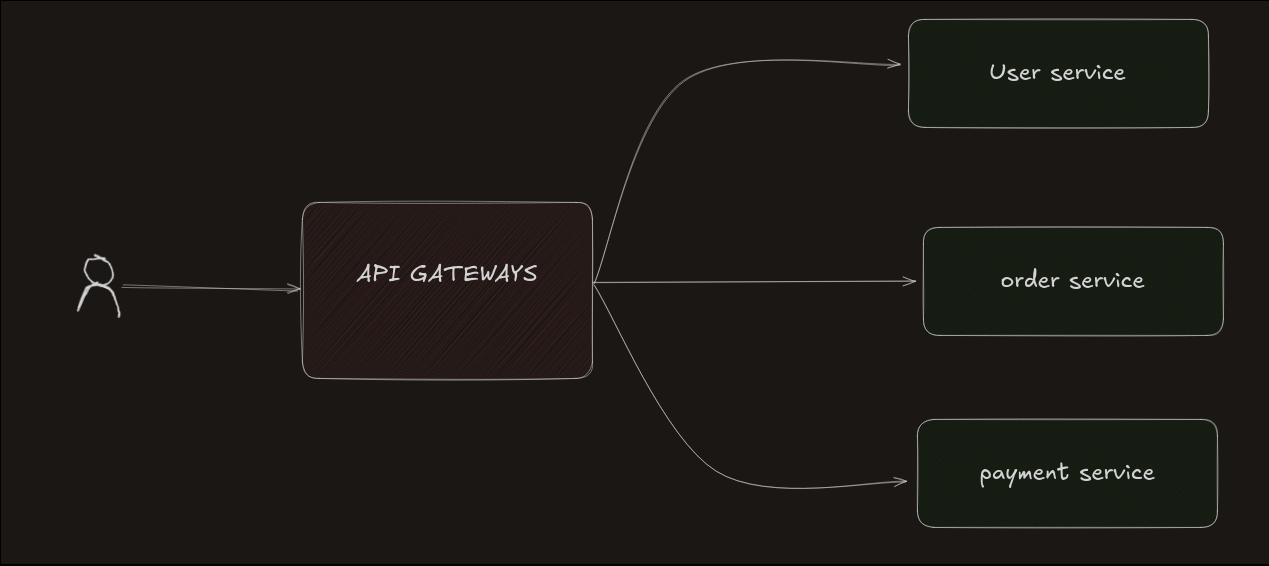
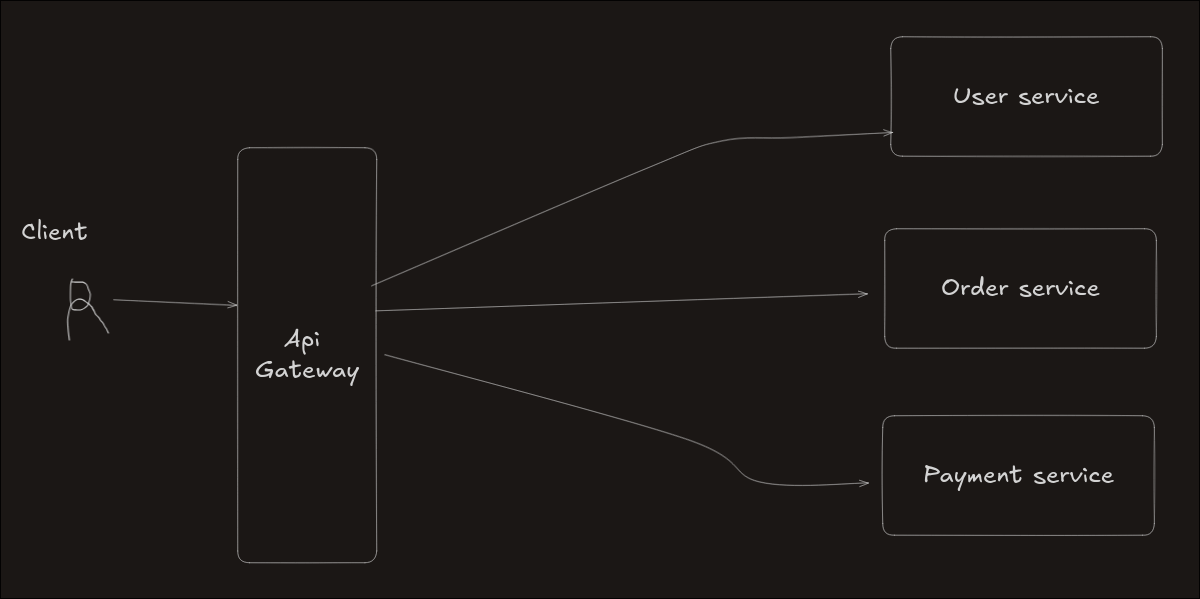
When a user sends a request to an application, the request first goes to the API Gateway. The gateway understands what the user wants and then sends the request to the correct service.
For example:
- Login requests go to the User Service
- Order requests go to the Order Service
- Payment requests go to the Payment Service
So the API Gateway simply acts like a reception desk that directs requests to the correct service.
API Composition
Sometimes a user request needs information from multiple services.
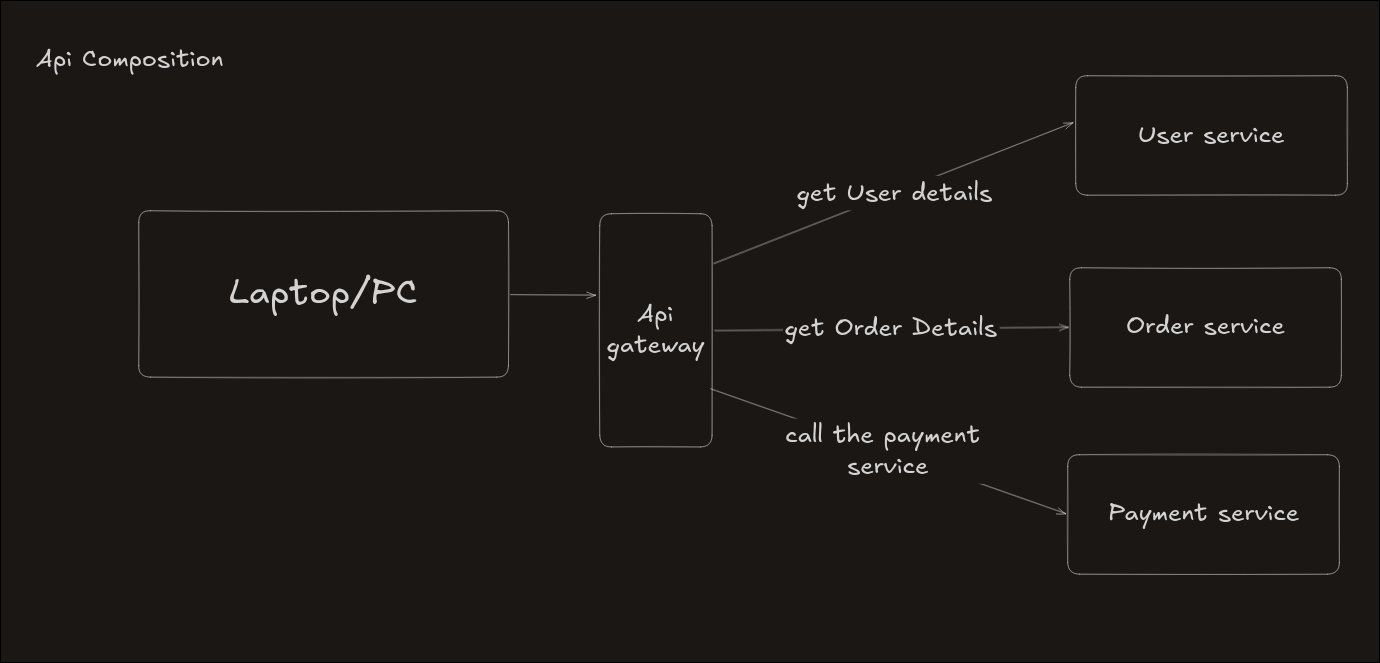
For example, when a user places an order, the system might need to:
- Check the user details
- Create the order
- Process the payment
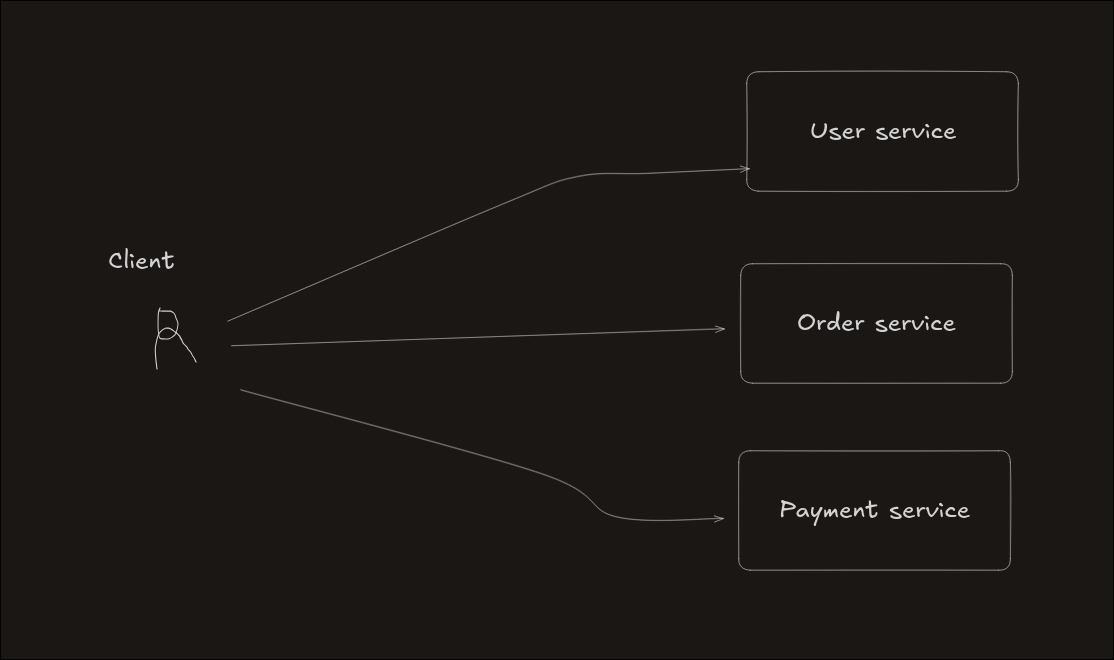
Without API composition, the client application would need to contact all these services separately, which makes things complicated.
API Composition solves this problem.
Instead of the client calling many services, the API Gateway collects information from different services, combines it, and sends a single response back to the client.
This makes things much simpler for the client.
Types of API Composition
There are two ways services can be combined.
Sequential Composition
In this method, services are called one after another.
Example:
- Check user details
- Create the order
- Process the payment
Each step waits until the previous step finishes.
Advantages
- Easier to understand and manage
- Works well when one service depends on another
Disadvantages
- Slower because every step waits for the previous one
Parallel Composition
In this method, the gateway calls multiple services at the same time.
For example, the system may request:
- user profile
- order history
- product recommendations
all at once.
Advantages
- Faster responses in many cases
Disadvantages
- Harder to manage errors
- If one service fails, combining results becomes difficult
- Debugging problems becomes more complicated
Advantages of API Composition
API composition provides several benefits.
- The client only sends one request instead of many.
- Applications become simpler for frontend developers.
- The system can return different responses for different devices.
For example:
- Mobile apps might receive less data
- Desktop apps might receive more detailed data
Disadvantages of API Composition
Although useful, API composition also has some challenges.
- If one service becomes slow, the entire response becomes slow.
- If one service stops working, the system may fail to produce the final result.
- This means the system depends on multiple services being available at the same time.
So while API composition simplifies things for users, it adds more responsibility to the gateway system.
API Gateway and Authentication
Another important role of an API Gateway is authentication.
Before sending a request to any service, the gateway first checks whether the user is allowed to access the system. It usually does this by contacting an Authentication Service.
If the user is verified, the request continues to the required service. If not, the request is rejected.
This keeps the system secure and ensures that authentication is handled in one central place.
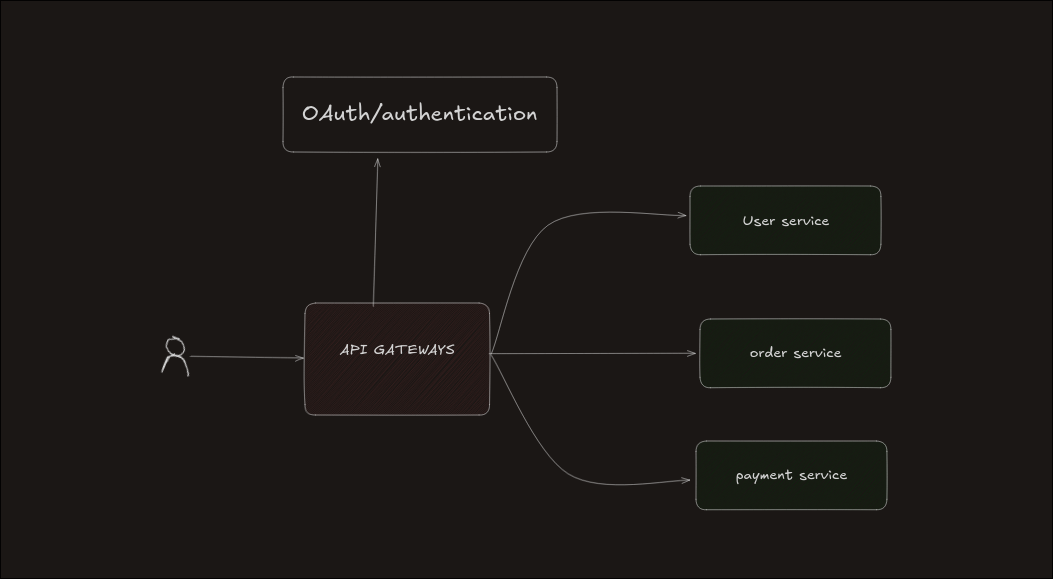
Example flow:
Client Request → API Gateway → Authentication Service
If authenticated → Request forwarded to services If not authenticated → Request rejected
API Gateway and Service Discovery
In microservice systems, services may start, stop, or move between servers.
Because of this, the API Gateway must always know where each service is currently running.
This is handled by something called Service Discovery.
Service discovery keeps track of:
- Which services are running
- Which services are down
- The current location of each service
Whenever the API Gateway needs to send a request, it asks the service discovery system where that service is located.
This helps avoid sending requests to services that are not available.
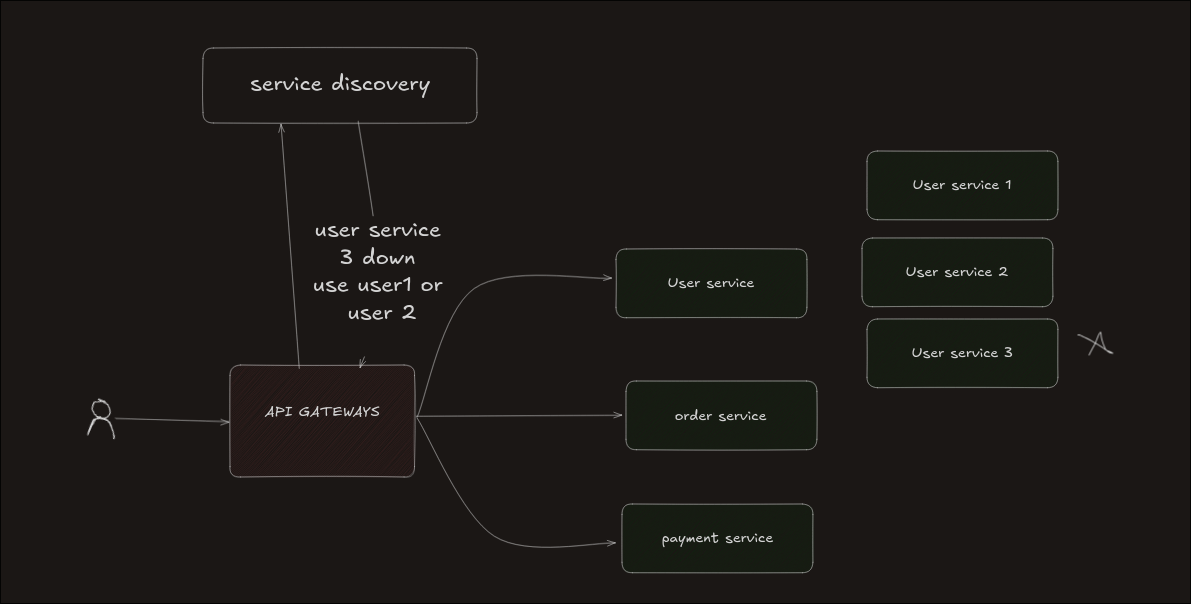
Example flow:
Client Request → API Gateway API Gateway → asks Service Discovery Service Discovery → returns service location API Gateway → sends request to the correct service
Load Balancers
After the API Gateway decides which service should handle a request, another question appears:
Which server should handle the request?
In large systems, a service usually runs on multiple servers so it can handle many users at the same time.
A Load Balancer helps distribute requests between these servers so that no single server becomes overloaded.
For example:
- The API Gateway decides that the request should go to the Payment Service.
- The Load Balancer chooses one server from many payment servers.
This keeps the system fast and stable.
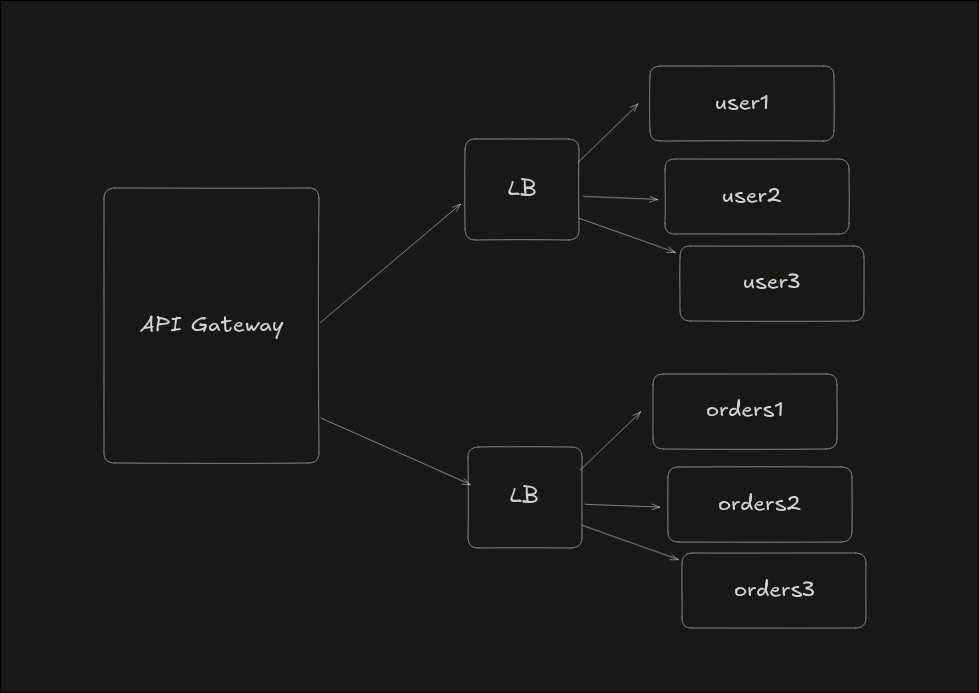
Example flow:
Client Request → API Gateway API Gateway → identifies service Load Balancer → chooses one server Request → sent to that server
In simple terms:
- API Gateway decides which service is needed
- Load Balancer decides which server should handle the request
Scaling an API Gateway
A common question is:
Is there only one API Gateway?
In small systems, there might be only one gateway. But as the number of users grows, one gateway may not be enough.
To solve this, systems use multiple regions and DNS routing.
Scaling with Regions
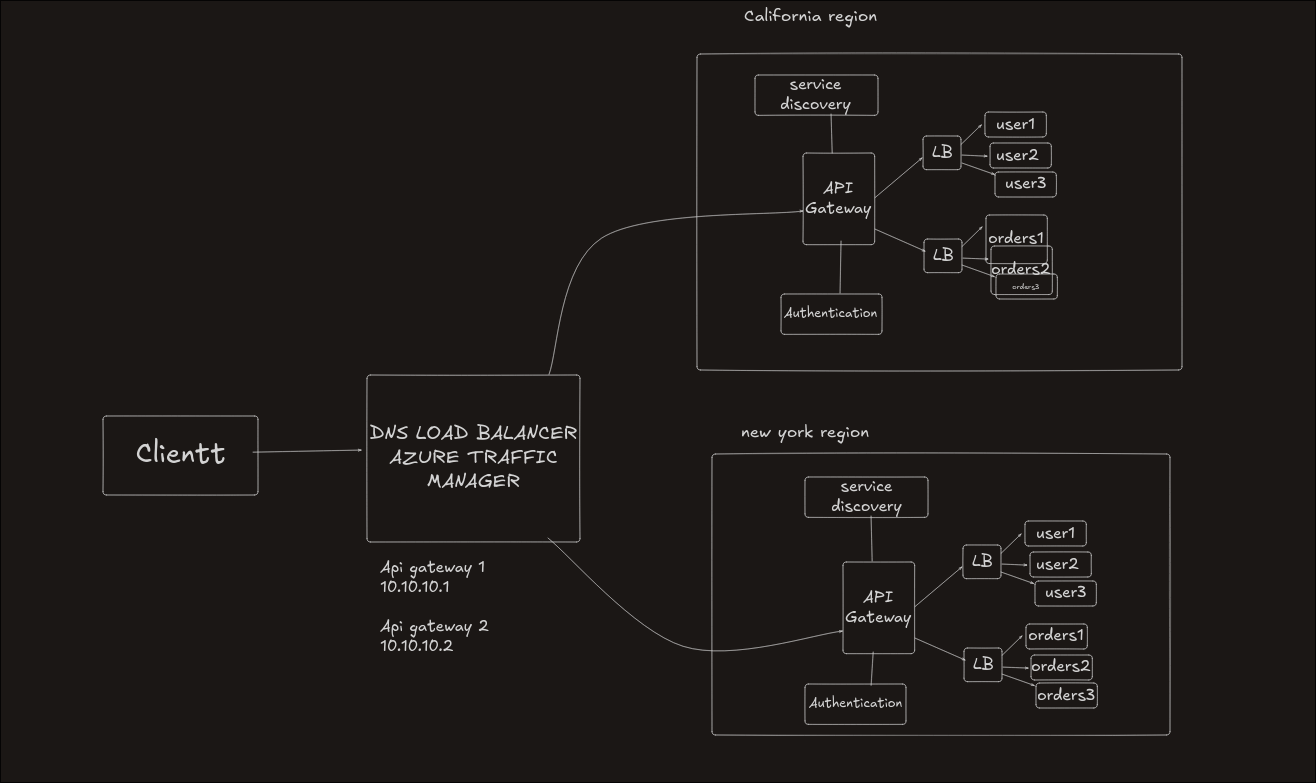
Large systems divide their infrastructure into different regions.
For example:
- New York region
- California region
Each region contains the same setup:
- API Gateway
- Authentication Service
- Service Discovery
- Load Balancer
- Microservices
This allows each region to handle traffic independently.
DNS-Based Traffic Distribution
To decide which region should receive a request, systems use DNS routing.
Instead of pointing a domain like:
api.domain.com
to a single server, DNS can point it to multiple IP addresses, each belonging to a different region.
When a user sends a request, DNS sends the request to one of these regions.
This spreads traffic across multiple gateways.
Final Request Flow
The full request journey looks like this:
- DNS decides which region should handle the request
- The request reaches the API Gateway in that region
- The gateway checks authentication and routes the request
- The Load Balancer selects a server
- The request reaches the correct microservice
Final Thoughts
API Gateways are an important part of modern applications. They act as the main entry point for requests and help manage communication between different services.
When combined with API composition, authentication, service discovery, load balancing, and regional scaling, they allow applications to handle large numbers of users while staying reliable and organized.