
Monolithic vs Microservices — Notes from My System Design Journey
For a long time, I wanted to properly study system design — especially the HLD (High-Level Design) part. I knew the basics of monolithic and microservices architecture, but it always felt theoretical.
Recently, I finally started going deeper into it.
At work, most of our backend runs as a monolith. A single server. A single deployment. Everything living together. And honestly, for a while, it worked perfectly fine.
But then I ran into something interesting.
Working with a Monolith in Real Life
In our codebase, most of the logic sits in one place:
- APIs
- Business logic
- Database access
All deployed together.
This is classic monolithic architecture.
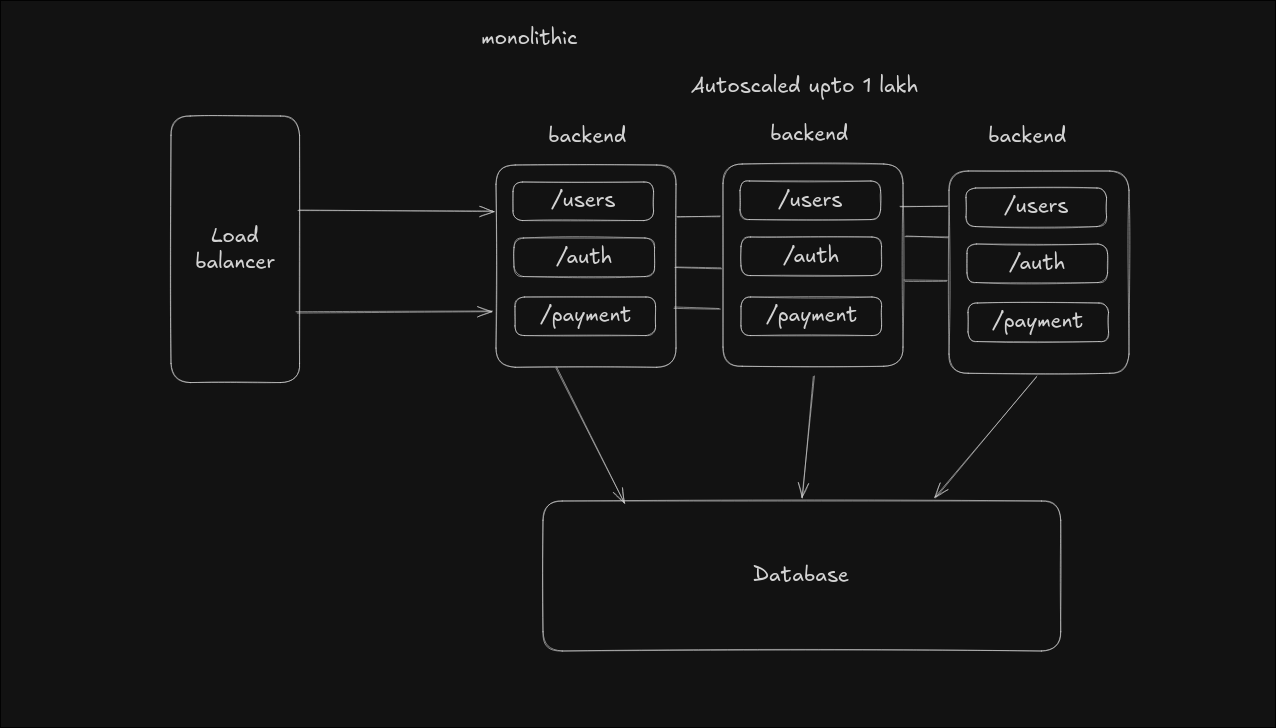
It’s straightforward. Easy to reason about. Easy to deploy.
But things got complicated when asynchronous tasks entered the picture.
We had:
- Queue services
- Background workers
- Long-running jobs
Even though it was still technically a monolith, I had to separate concerns:
- The API layer
- The worker processes
- The queue system
Now suddenly, I wasn’t just thinking about one application. I was thinking about coordination between components.
And that’s where microservice thinking started creeping in.
When Microservice Thinking Starts
Even inside a monolith, once you introduce:
- Queues
- Workers
- Background processing
- Event-driven flows
You start thinking in distributed terms.
You start asking:
- What if this task fails?
- What if this job runs twice?
- What if this service is slow?
- What happens when one part succeeds and another fails?
That’s when system design stops being theory and becomes practical.
Revisiting Monolith vs Microservices
While studying HLD, I started revisiting the fundamentals.
A monolith is one deployable unit.
It’s simple and cohesive.
A microservices architecture splits the system into independent services.
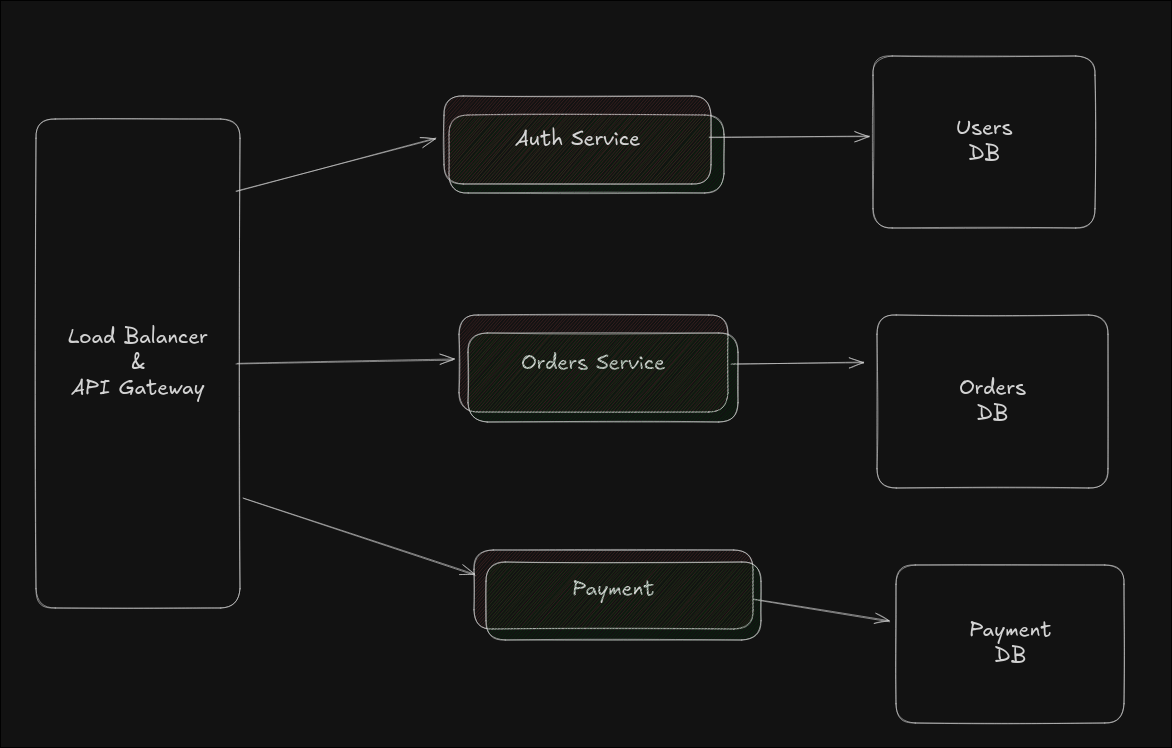
Each service:
- Owns its data
- Deploys independently
- Communicates over the network
The key difference isn’t just structure.
It’s operational complexity.
Deployment Concerns — Canary
When I started reading more about scaling systems, deployment strategies became important.
Canary deployment stood out because it’s practical.
Instead of pushing a new version to everyone:
- Most traffic goes to the old version
- A small percentage goes to the new version
If things look stable, increase traffic gradually.
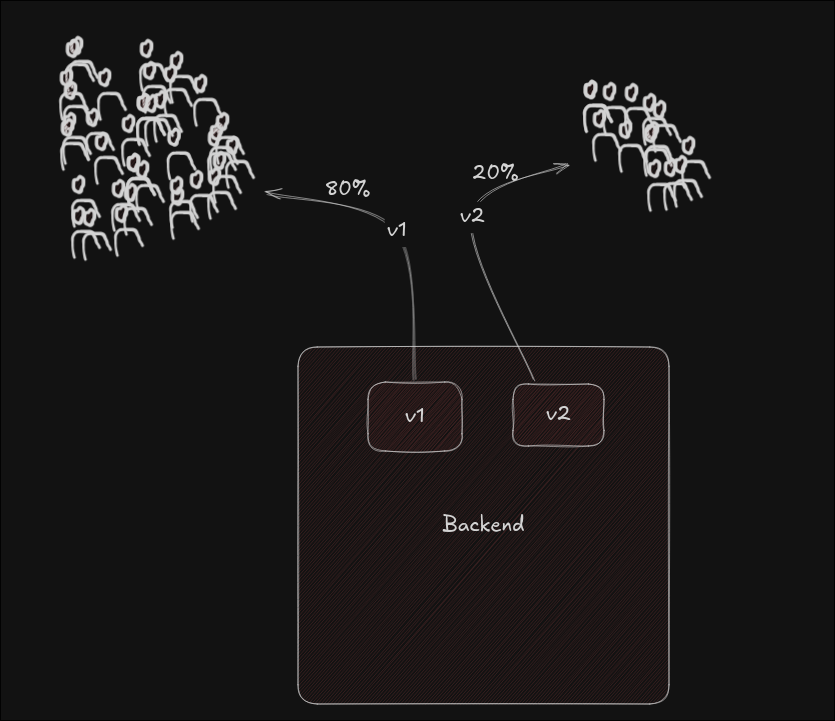
This isn’t theory. This is how you reduce real production risk.
Migration Thinking — Strangler Pattern
Another concept that made sense during system design was the Strangler Pattern.
Instead of rewriting a monolith entirely:
- Keep it running
- Extract one feature into a new service
- Route traffic to the new service
- Repeat
Over time, the monolith shrinks.
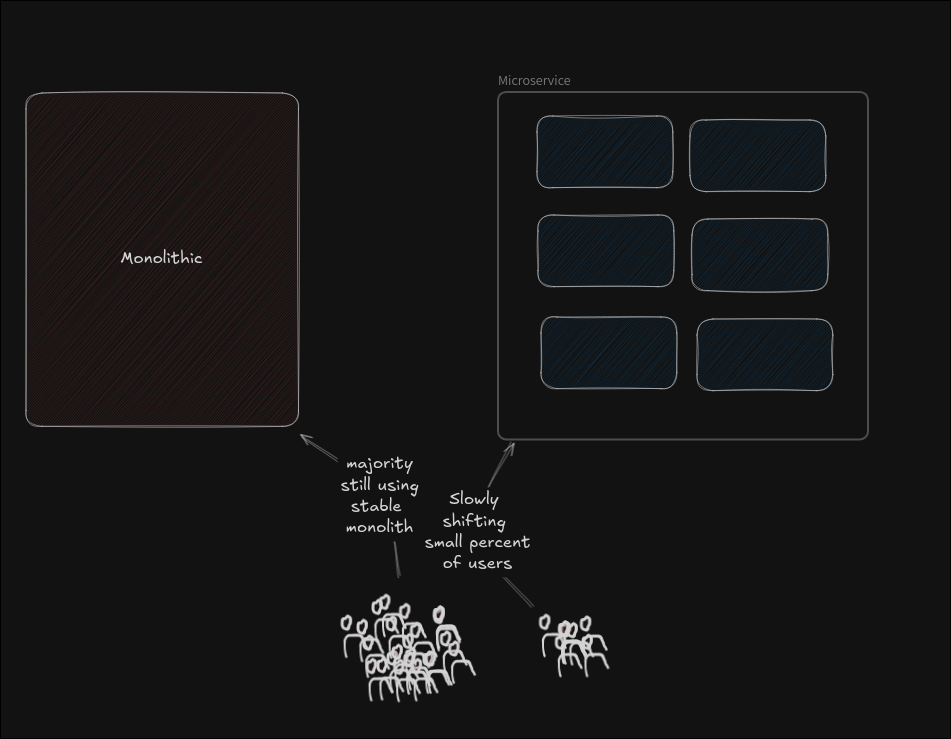
This felt very realistic. No big-bang rewrite. Just controlled evolution.
The Real Distributed Problem — Consistency
The biggest shift in my thinking came when I understood distributed consistency.
In a monolith, if something fails, you roll back the database transaction.
Simple.
In microservices, each service owns its own database.
Now imagine:
- Order is created
- Payment fails
Order exists. Payment doesn’t.
No shared transaction. No automatic rollback.
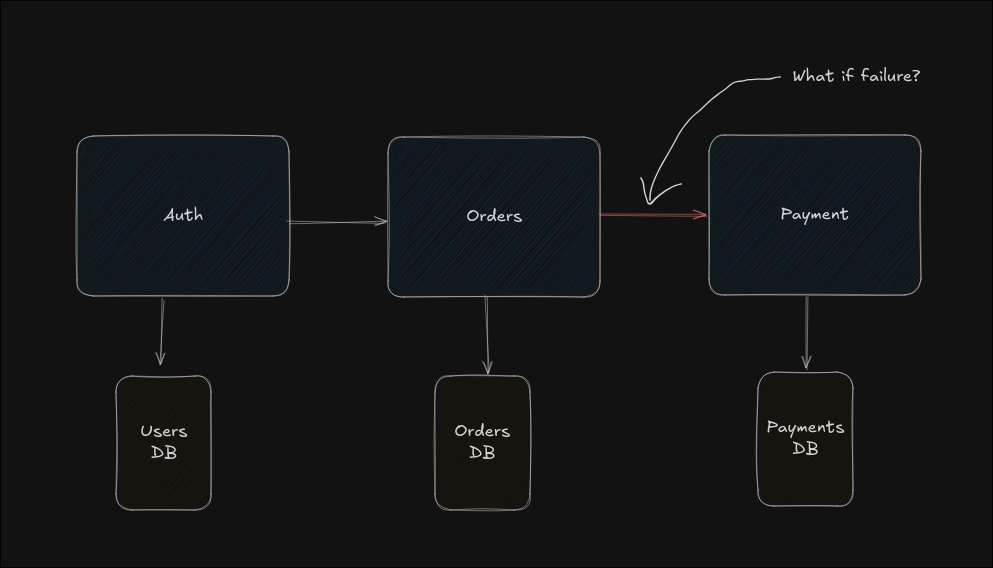
This is where Saga comes in.
Saga — Event-Driven
One solution is event-driven coordination.
For example:
- Order Service creates order → emits event
- Payment Service listens → processes payment
- If payment fails → emits failure event
- Order Service listens → cancels order
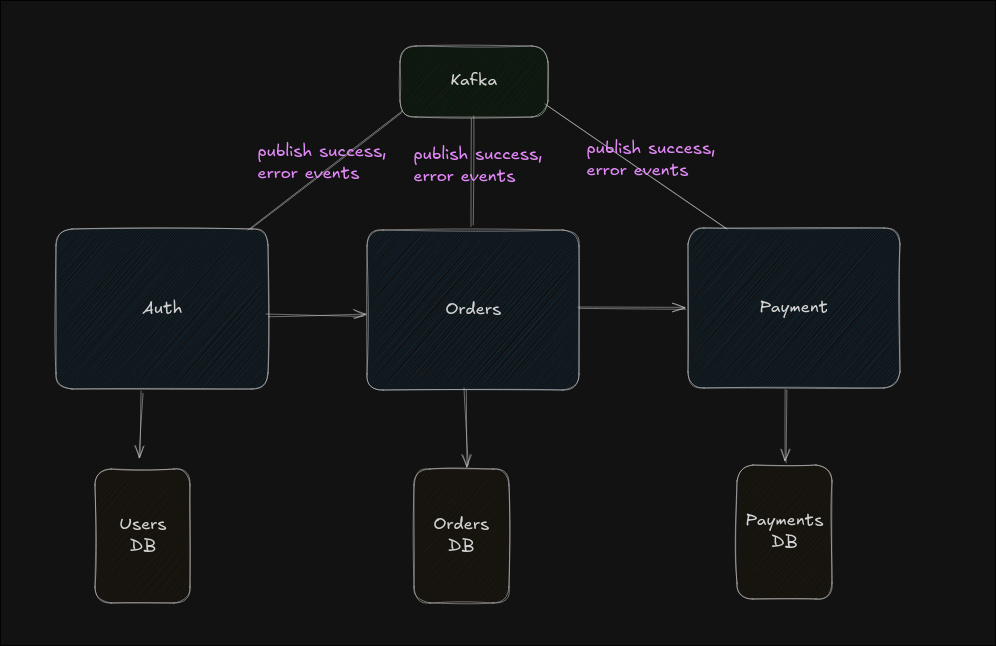
Each service reacts to events.
No central controller. But tracing the flow becomes more complex.
Saga — Orchestration
Another approach is using a controller.
The controller:
- Calls Order Service
- Calls Payment Service
- If payment fails → cancels order
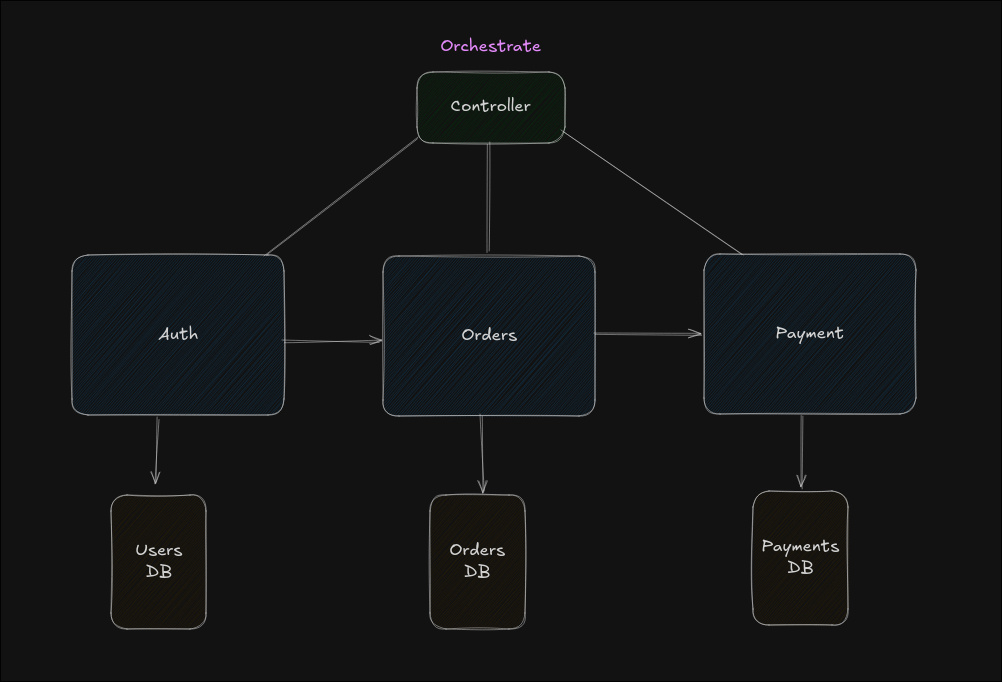
More centralized. Easier to reason about. But now you depend heavily on the orchestrator.
What Changed for Me
Before studying system design seriously, these patterns felt abstract.
After working with queues, workers, and asynchronous tasks inside a monolith, I started seeing why these patterns exist.
Microservices are not just about splitting code.
They’re about handling:
- Independent failures
- Distributed state
- Partial success
- Safe deployments
- Gradual evolution
Right now, I still work mostly with a monolithic architecture.
But understanding microservices, Saga, Strangler, and deployment strategies has changed how I think about system boundaries.
System design stopped being interview preparation.
It became a way to think about real problems in production systems.